Expert Water Heater Repair in Pennsylvania
Christian Heating, Cooling, Plumbing & Electrical is proud to serve homeowners across Bucks, Montgomery, and Chester Counties, and a water heater problem is one of the most common calls we get. The good news is that many issues are fixable if you catch them early. This guide walks through the most common causes, what you can safely check on your own, and when it’s time to call a professional.
What Are the Most Common Water Heater Problems in Pennsylvania?
Southeastern Pennsylvania puts water heaters through a lot. Hard water, cold winter temperatures, and heavy household demand all add wear. Here are the problems we see most often.
- No hot water at all: Usually a tripped breaker, a failed heating element, a bad thermostat, or a pilot light or ignition problem on gas models.
- Not enough hot water: Often caused by sediment buildup, a failing element, or a dip tube that has broken down.
- Water that is too hot or not hot enough: This typically points to a faulty thermostat or a thermostat set incorrectly.
- Strange noises: Popping, rumbling, or banging usually means sediment has hardened at the bottom of the tank.
- Rusty or discolored water: A sign of internal corrosion, a worn anode rod, or rust in your pipes.
- Leaks: From a loose fitting to a failed valve to a cracked tank.
Each of these has a different cause and a different fix, which is why a proper diagnosis matters before anyone starts replacing parts.
Call NowAdditional Resources
Why Does My Water Heater Keep Running Out of Hot Water?
If your showers go cold faster than they used to, the problem is rarely random. Something has changed inside the system.
Here are the usual suspects:
- Sediment buildup: Minerals from hard water settle at the bottom of the tank. They take up space that would otherwise hold hot water and insulate the water from the heat source.
- A failed heating element (electric models): Most electric tanks have two elements. If one burns out, you may still get some hot water, just not much of it.
- A broken dip tube: This part sends incoming cold water to the bottom of the tank. When it cracks, cold water mixes with hot water near the top.
- Higher demand: A growing family, a new soaking tub, or a new dishwasher can outgrow the capacity of your current unit.
- Colder incoming water in winter: The heater has to work harder to raise the temperature, which can make a marginal system feel undersized.
What Can You Safely Check Before Calling a Pro?
A few quick checks can save you time, and they can also give your technician useful information. Always put safety first. If you smell gas, leave the home and call your gas utility and emergency services right away.
Quick Troubleshooting Checklist
- Check the breaker (electric models): Look for a tripped breaker in your panel and reset it once. If it trips again, stop and call a technician.
- Look at the thermostat setting: Confirm it hasn’t been bumped or lowered. About 120°F is a common, comfortable setting for most households.
- Check the pilot light (gas models): See if it is lit. A pilot that keeps going out can point to a failing thermocouple or a draft issue.
- Inspect around the tank: Look for moisture, puddles, or rust on the tank, fittings, and pipes.
- Press the reset button (electric models): Many electric units have a high-limit reset button behind the access panel. Only do this with the power off, and call a pro if you are not comfortable removing the panel.
- Note any error codes (tankless models): Write down the code displayed on the unit so your technician can diagnose it faster.
Please skip any task that involves live electrical connections, gas lines, or the pressure relief valve. Those are jobs for a licensed professional.
Water heater not working? Call Christian Heating, Cooling, Plumbing & Electrical in your area today for fast, reliable service.
How Does a Technician Diagnose and Repair a Water Heater?
A good repair visit is more than swapping a part and hoping for the best. Here is what a thorough process typically looks like.
- Listen to the problem. The symptoms you describe often narrow things down quickly.
- Inspect the unit. The technician checks the tank, connections, venting, and safety devices for signs of wear, leaks, or damage.
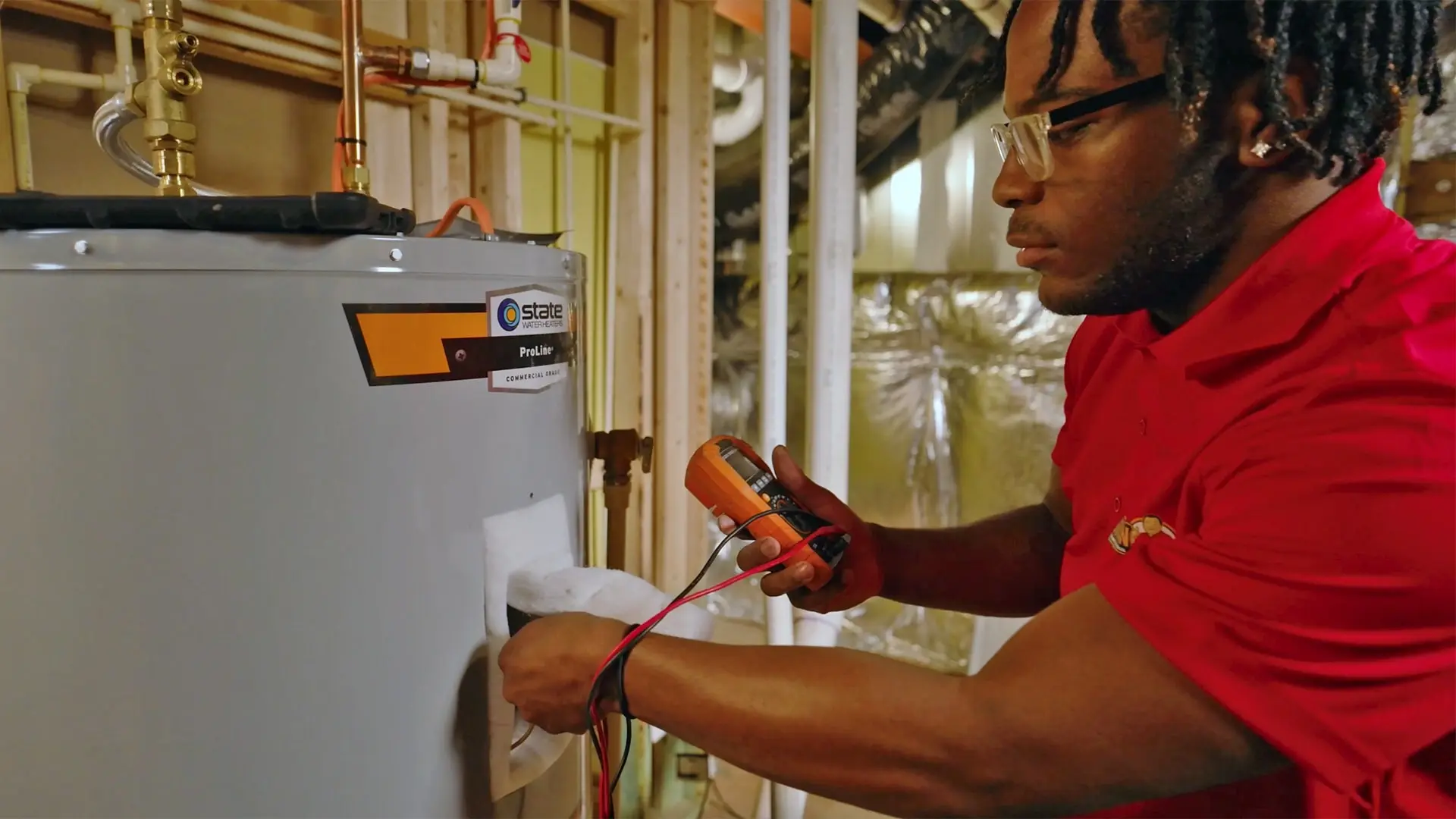
- Test the components. On electric models, that means checking elements and thermostats. On gas models, it means testing the burner, pilot or igniter, thermocouple, and gas valve.
- Confirm the cause. Sediment, corrosion, or a failing part is identified so the real issue gets fixed.
- Explain your options. You should hear what is wrong, what the repair involves, and whether repair or replacement makes more sense.
- Complete the repair and test. The system is run to confirm stable temperature, proper pressure, and safe operation.
What Water Heater Repairs Are Typically Needed?
Not every problem means a new unit. Many common repairs are straightforward when handled early.
- Replacing a heating element or thermostat on an electric tank
- Replacing a thermocouple, igniter, or gas control valve on a gas tank
- Replacing a temperature and pressure (T&P) relief valve
- Swapping a worn anode rod
- Replacing a cracked dip tube
- Flushing a sediment-heavy tank
- Repairing leaking fittings or supply connections
- Descaling a tankless unit or clearing a clogged inlet filter
Catching these issues early often costs far less than waiting until a small leak becomes a flooded basement.
What Are the Warning Signs of a Failing Water Heater?
Some symptoms are a nudge. Others are a signal to act quickly. Call a technician soon if you notice any of the following:
- Water pooling around the base of the tank
- Rusty, cloudy, or foul-smelling hot water
- A pilot flame that is yellow or orange instead of steady blue (gas models)
- Loud banging, popping, or hissing sounds
- A T&P valve that drips constantly
- A tripping breaker every time the heater runs
- Hot water that fades quickly despite a normal setting
If you see water actively leaking from the tank body, shut off the power or gas, close the cold water supply valve, and call for service right away.
Have a plumbing leak? Contact Christian Heating, Cooling, Plumbing & Electrical now for fast repairs.
Should You Repair or Replace Your Water Heater?
This is the question every homeowner asks, and the honest answer is that it depends. Most tank water heaters last roughly 8 to 12 years, and tankless units often last longer with regular maintenance. Age is only part of the equation.
Repair makes sense when:
- The unit is relatively young, generally under 8 years old.
- The problem is a single replaceable part, such as an element, thermostat, or valve.
- The tank itself is sound and not leaking.
- The unit has been maintained regularly.
Replacement makes sense when:
- The tank is leaking from the body.
- The heater is past 10 years and needs repeated repairs.
- Energy bills are climbing even though the unit is running normally.
- Rust is showing up in the hot water.
- Your household needs more hot water than the current unit can deliver.
A newer, high-efficiency tank or a tankless system can reduce energy use and free up floor space. A technician can walk you through the cost and comfort tradeoffs so you can decide with confidence.
Is It Better to Hire a Professional for Water Heater Repair?
Some homeowners are comfortable with small maintenance tasks, and that is fine. But repair work brings real risks.
- Gas and combustion safety: Faulty gas connections or venting can be dangerous.
- Electrical hazards: Water heater elements run on high-voltage circuits.
- Scalding and pressure: A tank holds a lot of hot, pressurized water.
- Code and warranty concerns: Improper repairs can cause problems with local codes or manufacturer warranties.
Bringing in a licensed technician protects your home and your family, and it usually gets hot water back faster than trial and error.
Frequently Asked Questions About Water Heater Repair
-
How long does a water heater repair usually take?
Many common repairs can be completed in a single visit, though timing depends on the type of unit, the parts required, and the condition of the system.
-
Why is my water heater leaking?
Leaks come from several places: loose fittings, a failed T&P valve, a worn drain valve, or a corroded tank. A leak from the tank body usually means replacement, while a leak at a fitting is often a quick fix.
-
Why does my water heater make popping or rumbling noises?
That sound is typically sediment at the bottom of the tank. Water gets trapped beneath the buildup and bubbles as it heats. A flush often helps, and regular maintenance helps prevent it.
-
Can hard water damage my water heater?
Yes. Mineral buildup reduces efficiency and can shorten the life of tank and tankless systems. A water softener can help slow the process.
-
What should I do if I have no hot water in winter?
Check the breaker or pilot light, confirm the thermostat setting, and look for leaks. If you cannot find the cause or notice any signs of damage, call a technician. Also check pipes in unheated areas, since freezing temperatures can sometimes affect water flow.
-
Is it normal for my water heater to be loud?
A little ticking as it heats or cools is common. Banging, popping, or loud rumbling is not, and it is worth having looked at.
Get Your Hot Water Back, the Right Way
A broken water heater is stressful, especially when it fails on the coldest day of the year. A quick diagnosis and a clear explanation of your options can turn a bad day around and help you avoid repeat breakdowns.
When it comes to your home’s comfort and safety, trust a local team that treats your house like a neighbor’s. Whether you need a small repair, a full replacement, or a tune-up to keep things running smoothly, Christian is ready to help homeowners from Southampton and Doylestown to West Chester and Villanova.
Ready for a seasonal tune-up or urgent repair? Schedule your appointment with Christian Heating, Cooling, Plumbing & Electrical today.