Expert Water Heater Replacement in Pennsylvania
Christian Heating, Cooling, Plumbing & Electrical is proud to serve homeowners across Bucks, Montgomery, and Chester Counties, and we’ve helped many families through this exact moment. The good news is that a replacement doesn’t have to be a scramble. This guide explains the signs it’s time, how to choose between tank and tankless, what installation involves, and how to plan ahead so you’re never caught off guard.
How Do You Know When It’s Time to Replace Your Water Heater?
Most tank water heaters last roughly 8 to 12 years, and tankless units often last longer with regular maintenance. Age is a useful starting point, but the unit itself will usually tell you more. Watch for these signs:
- Age: If your heater is approaching or past 10 years old, start planning.
- Leaks from the tank body: A leaking fitting can often be repaired, but a leaking tank almost always means replacement.
- Rusty or discolored hot water: This can point to internal corrosion.
- Rumbling, popping, or banging noises: Heavy sediment buildup is common in areas with hard water.
- Not enough hot water: If your household has outgrown the unit, or the unit is wearing out, showers run cold sooner.
- Rising energy bills: An aging, sediment-clogged heater works harder to deliver the same results.
- Repeated repairs: When service calls start stacking up, replacement often makes more financial sense.
Not sure if your water heater has reached the end of its life? Call Christian Heating, Cooling, Plumbing & Electrical today for fast, reliable service.
Call NowAdditional Resources
Why Do Water Heaters Wear Out Faster in Southeastern Pennsylvania?
Local conditions play a bigger role than many homeowners realize.
- Hard water: Minerals settle at the bottom of the tank as sediment. Over time, that layer reduces efficiency and speeds up corrosion.
- Cold winters: Incoming water is much colder in January than in July, so your heater works harder and runs longer.
- Heavy household demand: Laundry, dishes, showers, and baths add up quickly in busy homes.
- Unheated installation spaces: Heaters in basements, garages, and crawl spaces face more temperature swings.
Regular maintenance can slow the wear, but every tank eventually reaches the end of its life. Planning ahead gives you more choices and less stress.
Should You Repair or Replace Your Water Heater?
This is the most common question homeowners ask. Here is a simple way to compare.
Water heater repair makes sense when:
- The unit is under about 8 years old.
- The problem is a single part, such as a thermostat, heating element, or valve.
- The tank itself is intact and not leaking.
Water heater replacement makes sense when:
- The tank is leaking from the body.
- The heater is past 10 years and needs repeated repairs.
- Hot water is rusty or discolored.
- Energy bills keep climbing despite maintenance.
- Your household needs more hot water than the current unit can deliver.
A good rule of thumb: if a repair is a small fraction of the cost of a new unit and the heater is relatively young, repair is often reasonable. If the unit is older and showing multiple problems, putting more money into it may only delay the inevitable. A technician can look at your specific system and give you an honest recommendation.
What Are Your Water Heater Replacement Options?
There is no single best water heater. The right choice depends on your household size, fuel source, space, and budget.
Traditional Tank Water Heaters
These are the most common type. They store a set amount of hot water and keep it heated until you need it.
- Pros: Lower upfront cost and simple, familiar technology.
- Cons: They can run out of hot water during heavy use, take up floor space, and lose some heat while storing water.
Tankless (On-Demand) Water Heaters
Tankless units heat water as it flows through the system, so there is no storage tank.
- Pros: Endless hot water, a compact size, and often a longer lifespan.
- Cons: Higher upfront cost, and some homes need venting, gas line, or electrical upgrades to support them.
Heat Pump (Hybrid) Water Heaters
These units move heat from the surrounding air into the water rather than generating heat directly.
- Pros: High energy efficiency, which can help lower operating costs.
- Cons: They need adequate space and airflow, and they work best in areas that stay in a moderate temperature range.
Which Fuel Type Is Right for You?
Your choice is often shaped by what your home already has.
- Natural gas: Heats water quickly and is common in many Southeastern Pennsylvania homes.
- Electric: Simple installation and no combustion, though operating costs can run higher depending on your rates.
- Propane or oil: Found in some homes without natural gas service.
A technician can help you compare the long-term costs of each option for your home.
How Do You Choose the Right Size Water Heater?
Bigger is not always better. A unit that is too small leaves you running out of hot water, and one that is too large wastes energy.
Consider these factors:
- Household size: More people means more demand during peak times.
- Peak usage: Mornings and evenings, when showers and dishwashers overlap, are the true test.
- Fixtures and appliances: Soaking tubs, multiple bathrooms, and high-volume showerheads all increase demand.
- Available space: The unit has to fit the location and meet clearance requirements.
For tank models, capacity is measured in gallons. For tankless models, flow rate and temperature rise matter most. Sizing is worth getting right, so it is best done with a professional.
What Happens During a Water Heater Replacement?
Knowing what to expect takes a lot of the stress out of the process.
- Assessment and quote. A technician reviews your current setup, discusses your needs, and explains your options and pricing.
- Shut off and drain. Power or gas is turned off, the water supply is closed, and the old tank is drained.
- Remove the old unit. The old heater is disconnected and removed from your home.
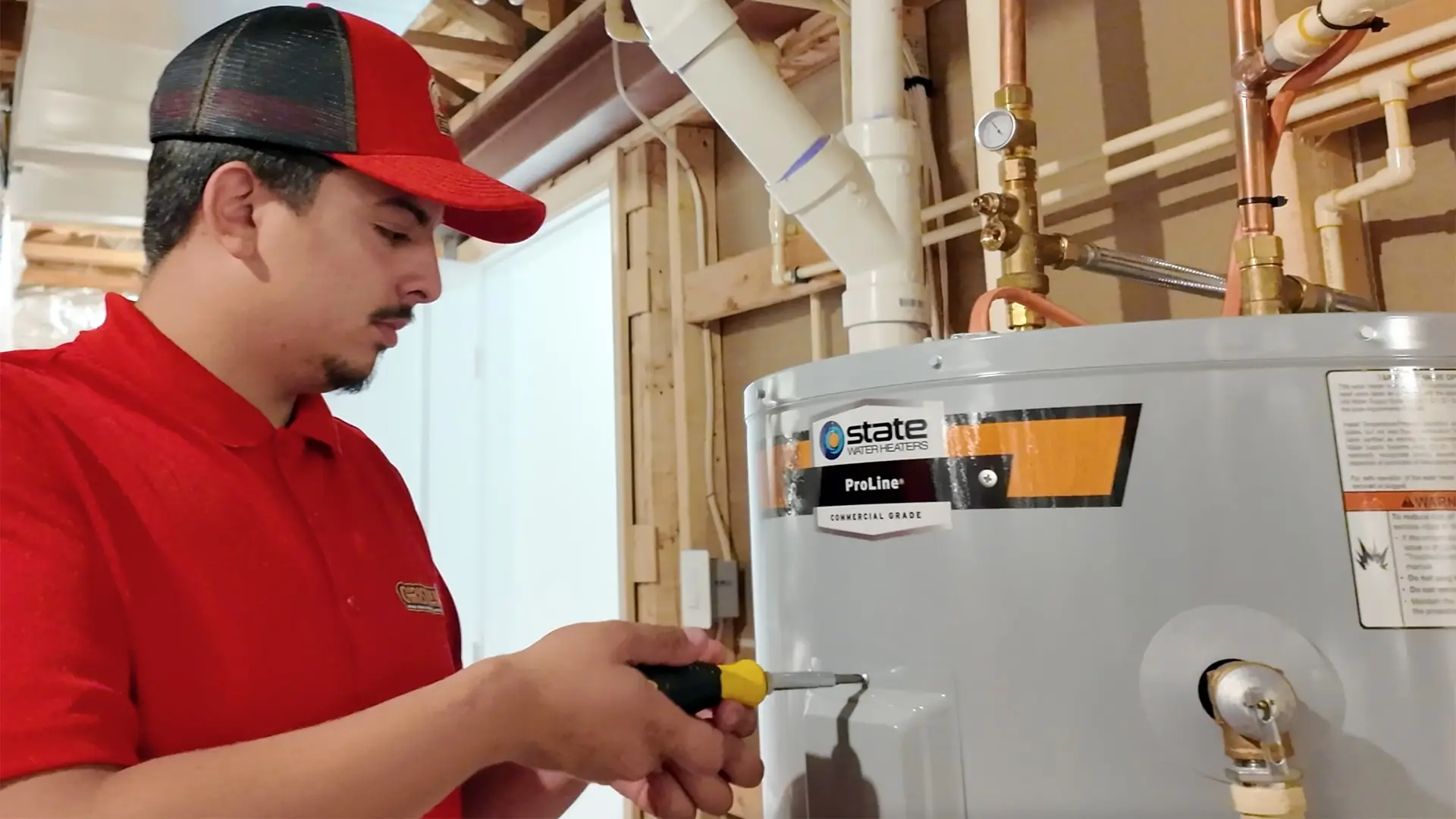
- Install the new unit. The new heater is positioned, connected to the water lines, and tied into the gas or electrical supply and venting as needed.
- Add safety components. This includes a temperature and pressure relief valve and any required discharge piping, as well as other items needed to meet local code.
- Fill, test, and adjust. The tank is filled, connections are checked for leaks, and the temperature is set.
- Walkthrough. You should leave with a clear explanation of how the system works and basic care tips.
Many replacements can be completed in a single visit, though timing depends on the type of unit, the condition of the existing setup, and any upgrades required.
What Should You Ask Before You Buy?
A few good questions can help you compare estimates with confidence.
- Is the quote for the unit, the installation, or both?
- Does the price include removal and disposal of the old heater?
- Are permits, venting changes, or code upgrades needed?
- What does the manufacturer warranty cover, and what does the installer’s labor warranty cover?
- What maintenance will the new unit need?
- Would a water softener or filter help protect the new heater?
Need expert help with your water heater? Contact Christian Heating, Cooling, Plumbing & Electrical now.
How Can You Make a New Water Heater Last Longer?
Once your new unit is in, a little attention goes a long way.
- Flush the tank about once a year to clear sediment.
- Have the anode rod inspected every few years.
- Test the temperature and pressure relief valve periodically.
- Keep the thermostat around 120°F for safety and efficiency.
- Insulate exposed pipes in unheated areas before winter.
- Descale a tankless unit about once a year, or more often with very hard water.
- Consider a water softener if your home has hard water.
These steps protect your investment and help keep hot water reliable all year.
Frequently Asked Questions About Water Heater Replacement
-
How long does a water heater last?
Most tank units last roughly 8 to 12 years. Tankless models often last longer with regular maintenance. Water quality, usage, and upkeep all affect lifespan.
-
How long does it take to replace a water heater?
Many standard replacements can be done in one visit. Switching fuel types, changing from tank to tankless, or fixing venting and piping issues can take longer.
-
Is a tankless water heater worth it?
For many households, yes, especially those that value endless hot water and space savings. The higher upfront cost and potential installation upgrades are worth weighing against long-term benefits.
-
Can I replace a water heater myself?
It is not recommended for most homeowners. Replacement involves water, gas or high-voltage electrical connections, venting, and pressurized components. Mistakes can be dangerous and may affect warranty or code compliance.
-
What should I do if my water heater is leaking?
Shut off the power or gas, close the cold water supply valve, and call a professional right away. If you smell gas, leave the home and contact your gas utility and emergency services.
-
Does the size of my water heater really matter?
Yes. An undersized unit runs out of hot water, and an oversized one wastes energy. A proper assessment helps you land on the right fit.
Replace Your Water Heater with Confidence
Nobody wants to think about a water heater until something goes wrong. But a little planning turns an emergency into a decision you control. You can choose the right type, the right size, and the right time instead of making a rushed call over a flooded floor.
When it comes to your home’s comfort and safety, trust a local team that treats your house like a neighbor’s. Whether you are planning ahead or facing an urgent breakdown, Christian is ready to help homeowners from Southampton and Doylestown to West Chester and Villanova.
Ready for a seasonal tune-up or urgent repair? Schedule your appointment with Christian Heating, Cooling, Plumbing & Electrical today.