Reliable Water Heater Maintenance in Pennsylvania
Christian Heating, Cooling, Plumbing & Electrical is proud to serve homeowners across Bucks, Montgomery, and Chester Counties, and we see this scenario more often than we’d like. The good news is that a little routine care goes a long way. This guide covers what Pennsylvania homeowners should do, how often, and when it’s time to bring in a professional.
Why Does Water Heater Maintenance Matter in Pennsylvania?
Your water heater works hard every day, and Southeastern Pennsylvania adds a few extra challenges.
- Hard water: Many homes in our region have moderately hard to hard water. Minerals settle at the bottom of a tank as sediment, forcing the heater to work harder and wear out sooner.
- Cold incoming water: In winter, the water entering your home is much colder, so your heater runs longer to reach temperature.
- Freezing temperatures: Pipes in unheated basements, garages, and crawl spaces are vulnerable during cold snaps.
- Constant demand: Between laundry, dishes, and showers, a busy household can put a heater through a lot of cycles.
Maintenance keeps your system efficient, extends its life, and helps you catch small problems before they become flooded basements.
Call NowAdditional Resources
What Happens Inside a Tank Water Heater Over Time?
Think of a tank water heater like a kettle you never descale. Every time it heats, minerals separate from the water and drop to the bottom of the tank. Over months and years, that layer thickens.
Sediment causes several problems:
- It insulates the water from the burner or heating element, so energy bills creep up.
- It can cause popping or rumbling noises as water bubbles through the buildup.
- It speeds up corrosion and can shorten the tank’s lifespan.
Inside the tank there’s also a part called the anode rod. Its job is to corrode instead of your tank, sacrificing itself so the steel lining lasts longer. Once it’s used up, the tank itself starts to rust.
How Is Tankless Water Heater Maintenance Different?
Tankless units don’t store water, so there’s no sediment pile at the bottom. But mineral scale still builds up inside the heat exchanger, and Pennsylvania’s hard water makes that a real issue.
For a tankless system, expect to:
- Descale the unit about once a year (more often with very hard water).
- Clean or replace inlet water filters.
- Check venting and combustion components on gas models.
- Confirm there are no error codes or performance drops.
Because descaling involves circulating a cleaning solution through the system, most homeowners schedule it with a professional. Skipped service can also affect warranty coverage, so keep your records.
Seasonal Water Heater Checklist for Bucks, Montgomery & Chester County Homes
Use this as a quick reference throughout the year.
Fall (before the cold sets in)
- Flush the tank.
- Test the T&P relief valve.
- Insulate exposed hot and cold pipes in unheated spaces.
- Make sure nothing is stored against the heater or blocking airflow.
Winter
- Listen for popping, banging, or rumbling sounds.
- Check around the base of the tank for moisture.
- Keep the area around the heater warm enough to avoid freezing pipes.
Spring
- Schedule a professional inspection, including the anode rod.
- Check for rust on the tank, fittings, and flue.
Summer
- Consider lowering the temperature setting while traveling.
- Watch for humidity-related condensation or corrosion on the unit and nearby pipes.
How Do You Know When You Need Professional Help?
Some warning signs shouldn’t wait for your annual flush. Call a technician if you notice:
- Water that is rusty, discolored, or smells like sulfur
- Not enough hot water, or water that runs out much faster than it used to
- Puddles or dampness around the tank
- Loud rumbling, popping, or banging noises
- A pilot light that keeps going out, or a yellow instead of blue flame on gas models
- A T&P valve that drips constantly
A small leak at a fitting is a quick repair. A leaking tank, on the other hand, usually means replacement. The earlier you catch the issue, the more options you have.
Have a plumbing leak? Contact Christian Heating, Cooling, Plumbing & Electrical now for fast repairs.
Should You Repair or Replace Your Water Heater?
Most tank water heaters last roughly 8 to 12 years, and tankless units often last longer with good maintenance. Age is only part of the picture, though. Here’s a simple way to compare.
Water heater repair makes sense when:
- The unit is under about 8 years old.
- The issue is a single part, such as a thermostat, heating element, or valve.
- The tank itself is intact and not leaking.
Water heater replacement makes sense when:
- The tank is leaking from the body.
- The heater is past 10 years and needing repeated repairs.
- Energy bills keep rising despite maintenance.
- Your household has outgrown the unit’s capacity.
A newer, high-efficiency model or a tankless system can lower energy use and free up floor space. A technician can walk through the cost and comfort tradeoffs with you before you commit.
What Should Homeowners Do to Maintain a Tank Water Heater?
Some tasks are simple enough for a confident homeowner. Others are best left to a licensed technician. Here’s how to tell the difference.
Step-by-Step: Flushing Your Tank
Flushing is one of the most effective maintenance steps. Manufacturers generally recommend doing it about once a year.
- Turn off power to the heater (switch off the breaker for electric models, or set gas models to “pilot” or “off”).
- Close the cold water supply valve at the top of the tank.
- Attach a garden hose to the drain valve near the bottom and run the other end to a floor drain or outside.
- Open a hot water faucet somewhere in the house to prevent a vacuum.
- Open the drain valve and let the tank empty completely.
- Briefly open the cold supply to stir up remaining sediment, then drain again until the water runs clear.
- Close the drain valve, refill the tank, and only then restore power or gas.
Never turn an electric heater back on before the tank is full. Dry-firing the elements can destroy them in seconds.
Testing the Temperature and Pressure Relief Valve
The temperature and pressure (T&P) relief valve is a critical safety device. Once or twice a year, place a bucket under the discharge pipe and lift the valve’s lever briefly. Water should flow out, then stop when you release it.
If nothing comes out, or it drips continuously afterward, the valve may need replacing. Don’t ignore this one, as it protects your home from dangerous pressure buildup.
Spotted a problem with your water heater? Call Christian Heating, Cooling, Plumbing & Electrical today for fast, reliable service.
Checking the Temperature Setting
Most households are comfortable with the thermostat set around 120°F. That setting reduces scald risk, especially for children and older adults, and it saves energy. Dropping it from higher settings can trim your utility costs without sacrificing comfort.
Inspecting the Anode Rod
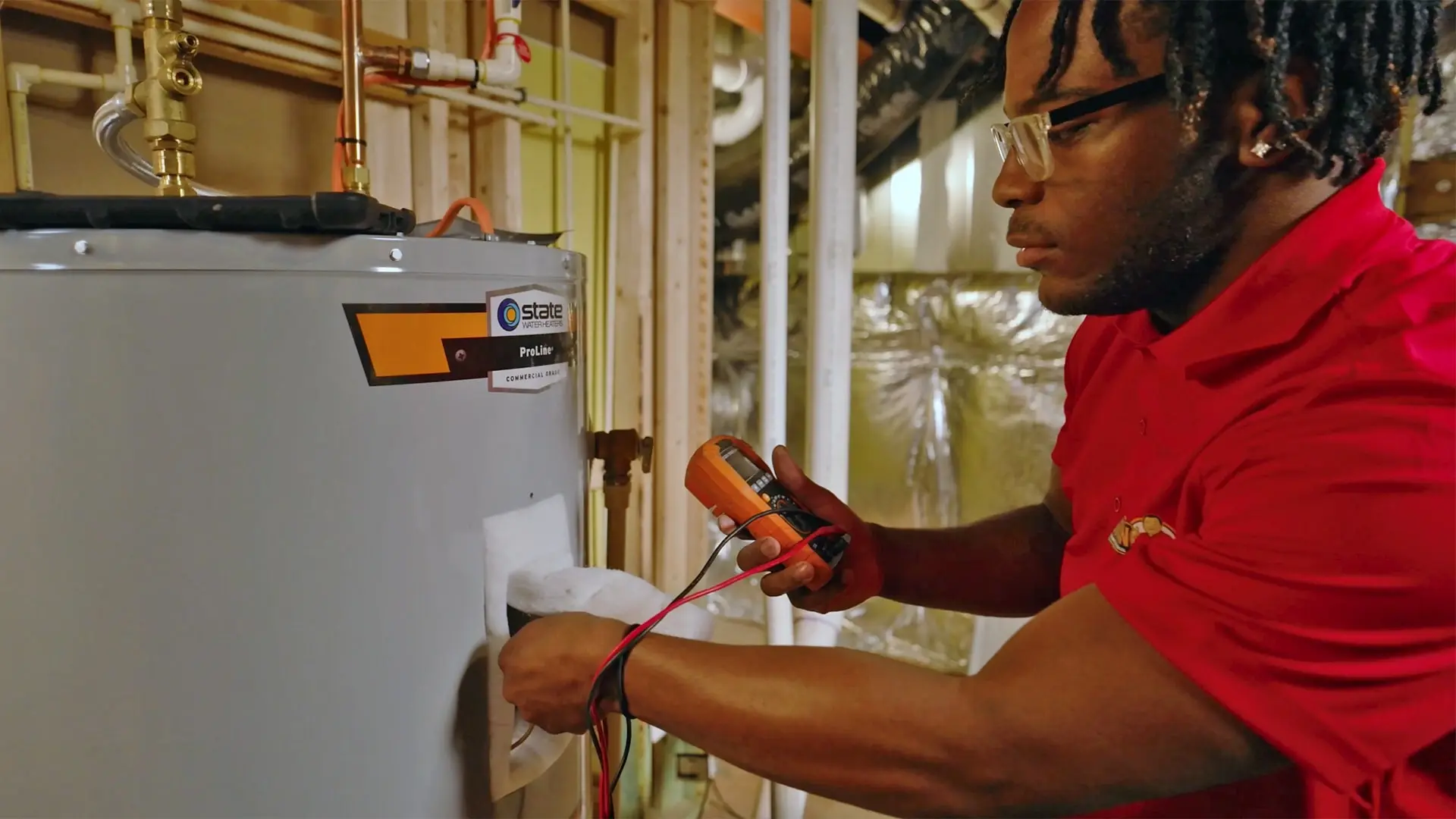
Plan on having the anode rod inspected every two to three years, sooner if your water is especially hard. Replacing it is far cheaper than replacing a rusted-out tank. This is a good task for a technician, since the rod can be stubborn to remove and the tank is heavy and pressurized.
Frequently Asked Questions About Water Heater Maintenance
-
How often should I flush my water heater in Pennsylvania?
At least once a year. If your water is very hard, or you hear noises from the tank, twice a year can help.
-
Can I maintain my water heater myself?
Simple tasks like checking the temperature setting, looking for leaks, and flushing the tank are doable for many homeowners. Anode rod work, gas components, and electrical connections are better handled by a licensed professional.
-
Will a water softener help my water heater?
Often, yes. Reducing mineral content slows scale and sediment buildup, which can protect both tank and tankless systems.
-
What if my water heater is in an unheated basement or garage?
Insulate the nearby pipes, seal drafts where you can, and keep an eye on the area during extended cold snaps.
-
How long does professional maintenance take?
A standard tune-up for a tank heater is usually a short visit, though timing varies by system and condition.
Keep Your Hot Water Reliable Year-Round
A water heater rarely asks for much, but it does ask for something. A yearly flush, a quick valve test, and a professional inspection every so often can add years to its life and save you from that cold-shower morning.
When it comes to your home’s comfort and safety, trust a local team that treats your house like a neighbor’s. Whether you need routine maintenance, a repair, or a full replacement, Christian is ready to help homeowners from Doylestown and Southampton to West Chester and Villanova.
Ready for a seasonal tune-up or urgent repair? Schedule your appointment with Christian Heating, Cooling, Plumbing & Electrical today.